
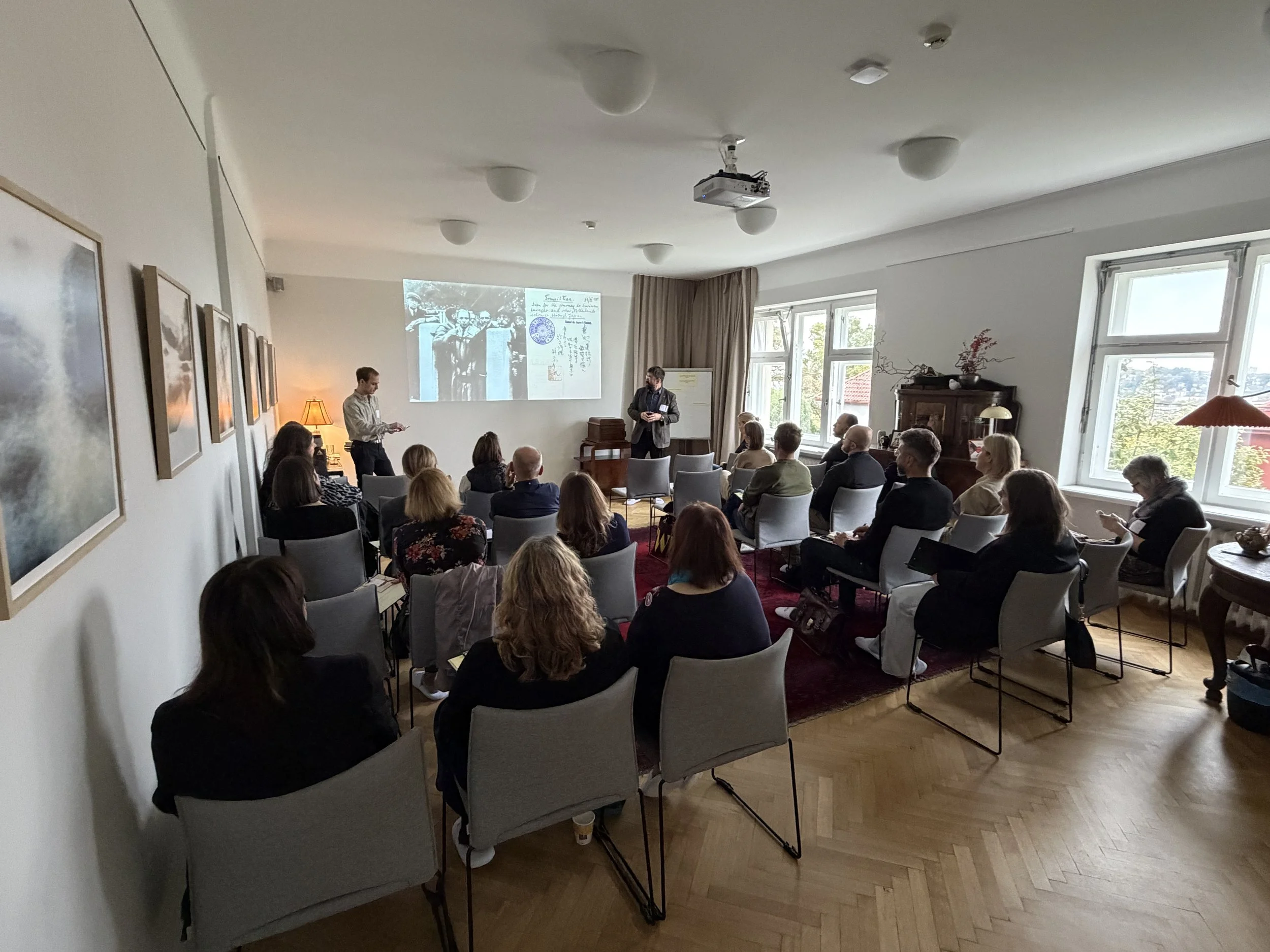
Participants at the Sugihara House Museum, Kaunas, 15 October 2026. Photo: Sugihara House Museum.
On 15 and 16 October 2026, the Sugihara House Museum in Kaunas hosted the international seminar "Digitised. Now What?" and a DIGICHer co-creation workshop. The event was organised by Sugihara House together with VILNIUS TECH, the coordinator of DIGICHer, and the Jewish Heritage Network (JHN) from the Netherlands. It brought together 26 people from Lithuanian museums, archives and libraries, the national museum information system LIMIS, Jewish heritage organisations and VILNIUS TECH.
Good at digitising, but what comes next?
Lithuanian museums hold millions of objects, and hundreds of thousands of them are already digitised and online. Yet a digitised object that nobody finds or uses often stays just a file on a server. Hence, the first day was built around three questions. Does anyone use what we digitise? What can AI realistically offer? Will these projects still matter in five years?
A short survey before the event showed why these questions matter. Two thirds of the participating institutions publish more than half of their digitised content online, but only 8% monitor how it is used. Only a third have a named person responsible for their digital projects five years from now.
Day one: who finds our collections, and why do projects stop?
Rokas Raudonius and Dr Linas Venclauskas (Sugihara Foundation) opened the day with the beta version of the Sugihara House Refugee Archive. Kristina Kurilaitė (LIMIS) then gave the national picture. In pairs, participants recalled real cases of someone outside the museum using one of their digitised objects. The usual users were historians, publishers and teachers. More and more often, objects reach people through local history groups on social media, while the LIMIS record remains the trusted source behind the post.
Pavel Kats (JHN) spoke about why digital solutions break: tour apps that are no longer maintained, QR codes that lead nowhere, project folders that get lost. His point was simple. Projects rarely lack money to build something. What they lack is the service that keeps it running after launch.
In the afternoon workshop "One object, a real audience", five thematic groups looked for a person, object or event whose traces are spread across several institutions. They then planned how to tell that story together with what already exists, such as LIMIS stories, Wikipedia and partners' audiences, instead of building a new website. The rule of the day was "link, don't copy".
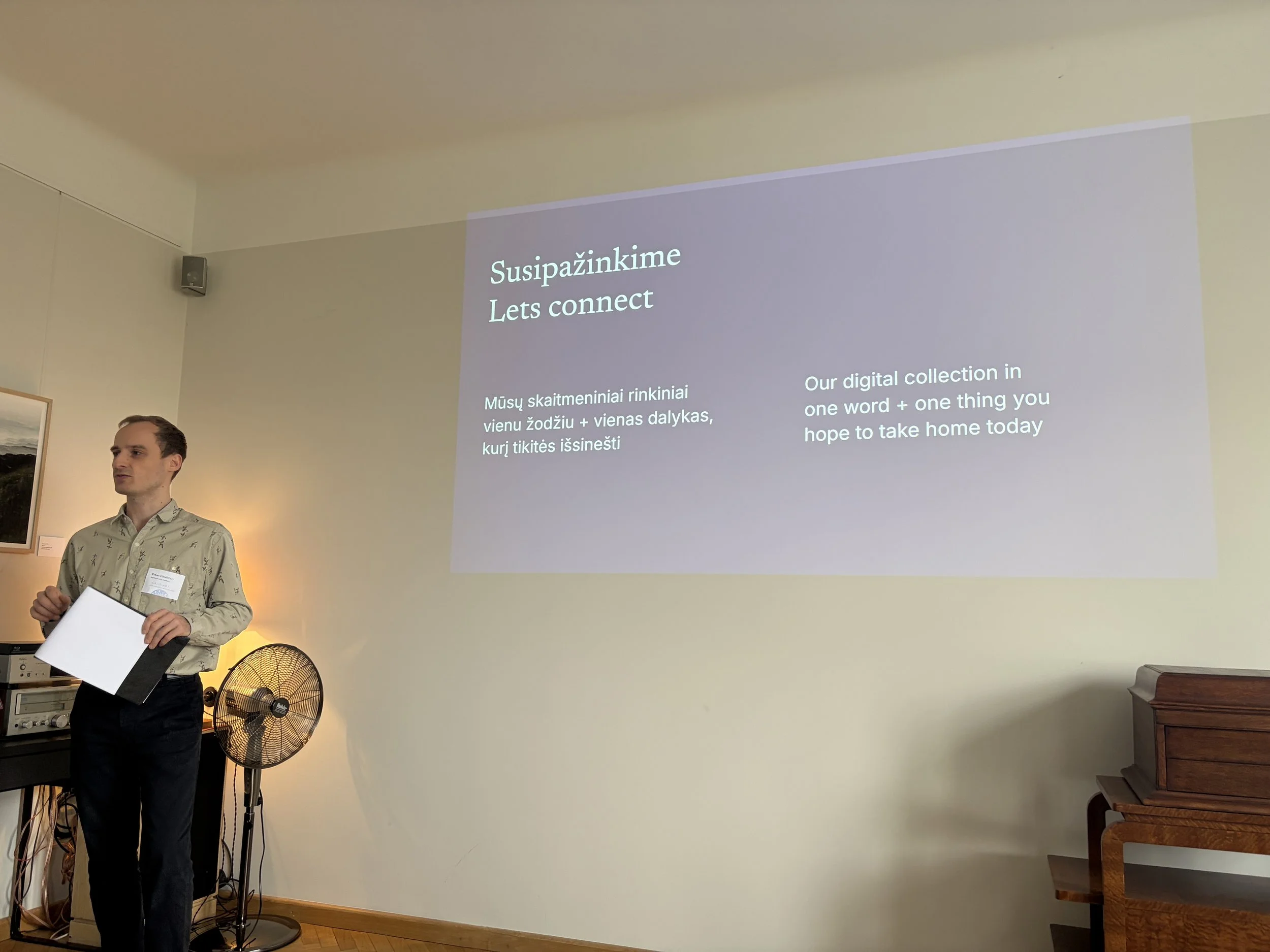
Rokas Raudonius presenting. Photo: Sugihara House Museum.
Day two: testing DIGICHer tools
On the second day, mixed groups tested two DIGICHer tools. The first was the online self-assessment instrument. It helps institutions reflect on how they involve minority communities in digitisation, before they take action. It has 20 indicators in six dimensions and a cross-cutting CARE indicator, and participants applied it to their own institutions. The second was the CARE principles reflection list. It helps check that activities address collective benefit, authority to control, responsibility and ethics. The groups applied it to the Refugee Archive beta.
The groups formulated proposals for improving the tools and ranked the most important ones:
present the result of the self-assessment as a short action plan with priorities, rather than as a score;
add questions about what happens after digitisation, such as use of the content and long-term maintenance;
review sensitive records before publication and set clear access conditions;
add examples for small institutions that have no digitisation specialist.
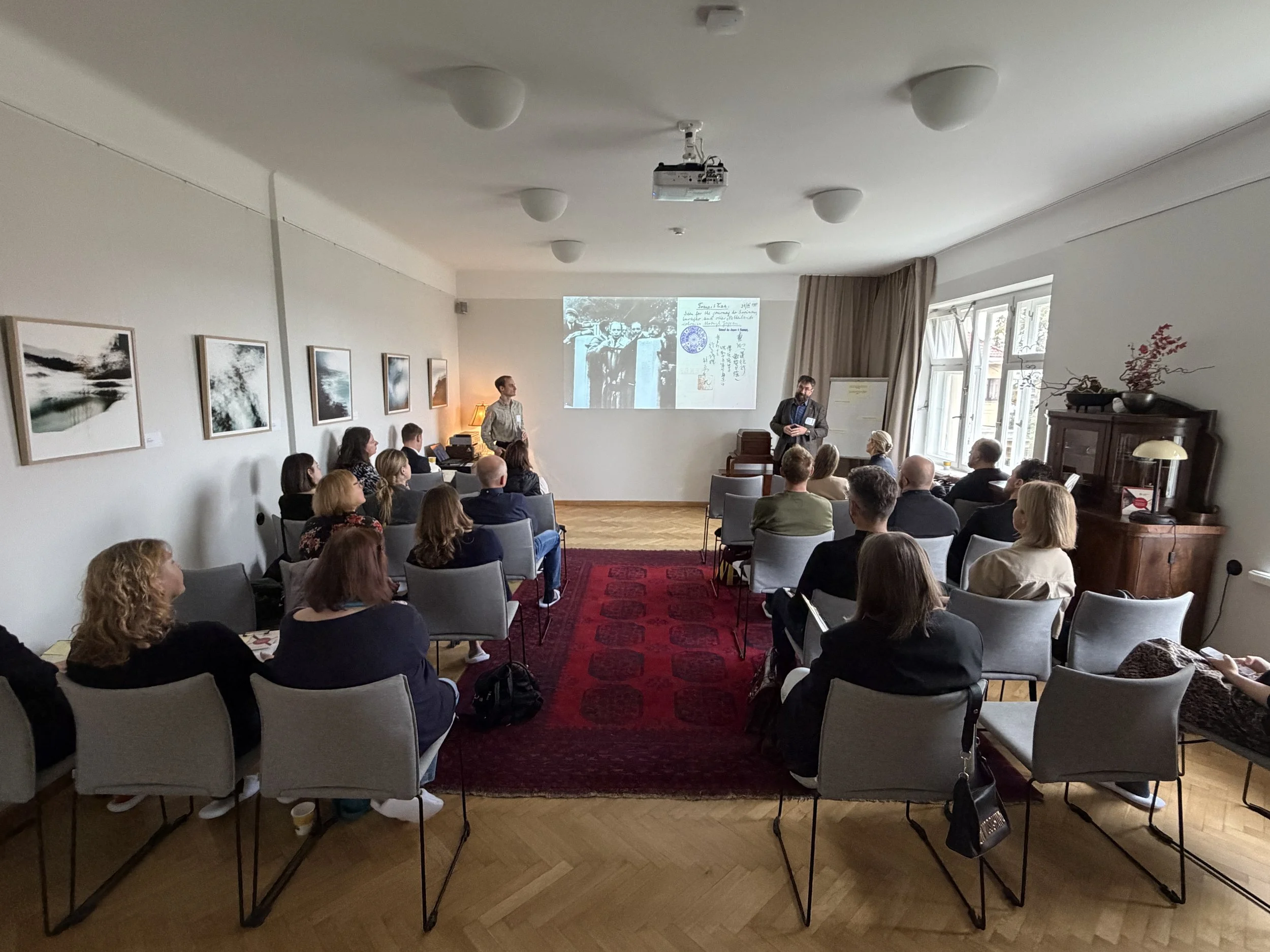
Plenary discussion at the Sugihara House Museum. Photo: Sugihara House Museum.
An important lesson: involving communities takes time
One story from the preparation of the event stays with us. Sugihara House had worked for almost a year with JHN on the Refugee Archive. A few days before the beta launch, it turned out that an independent project, the Sugihara Visa Archive (sugiharavisas.org), had already published a similar archive.
The two projects differ in how they were made. The Sugihara Visa Archive works from archival lists: it compares 15 lists and has linked 1,433 of the 2,140 people on Sugihara's register to at least one other source. The Sugihara House archive is built with descendants. They share material and family stories, and they can correct or restrict what is published about their families.
Following the CARE principles means asking for consent, agreeing on access and reviewing sensitive records before they go online. All of this takes longer. For funders and institutions, the message is that community-based digitisation needs more time and a matching budget. In return, an archive built with descendants can hold family knowledge and context that lists alone cannot provide. The two archives could also complement each other, one with the lists and the other with the family stories.
What comes next
The proposals from Kaunas will feed into the DIGICHer self-assessment tool, the CARE reflection lists and the project's recommendations for policymakers, institutions and communities. LIMIS will answer the participants' questions on data security, publishing beyond LIMIS and public versus internal access. The network of institutions that met in Kaunas plans to continue working together.
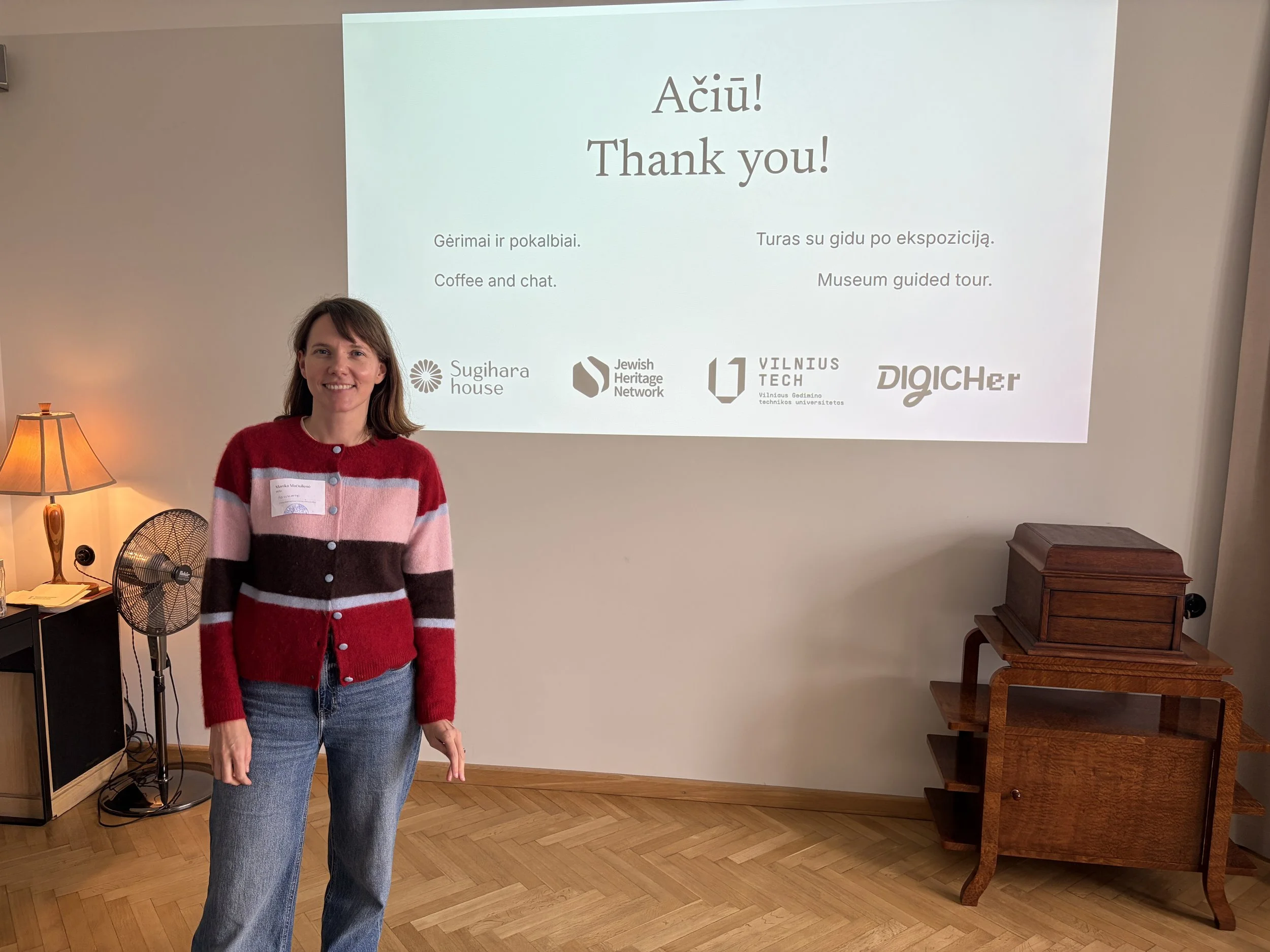
Monika Mačiulienė. Photo: Sugihara House Museum.
